
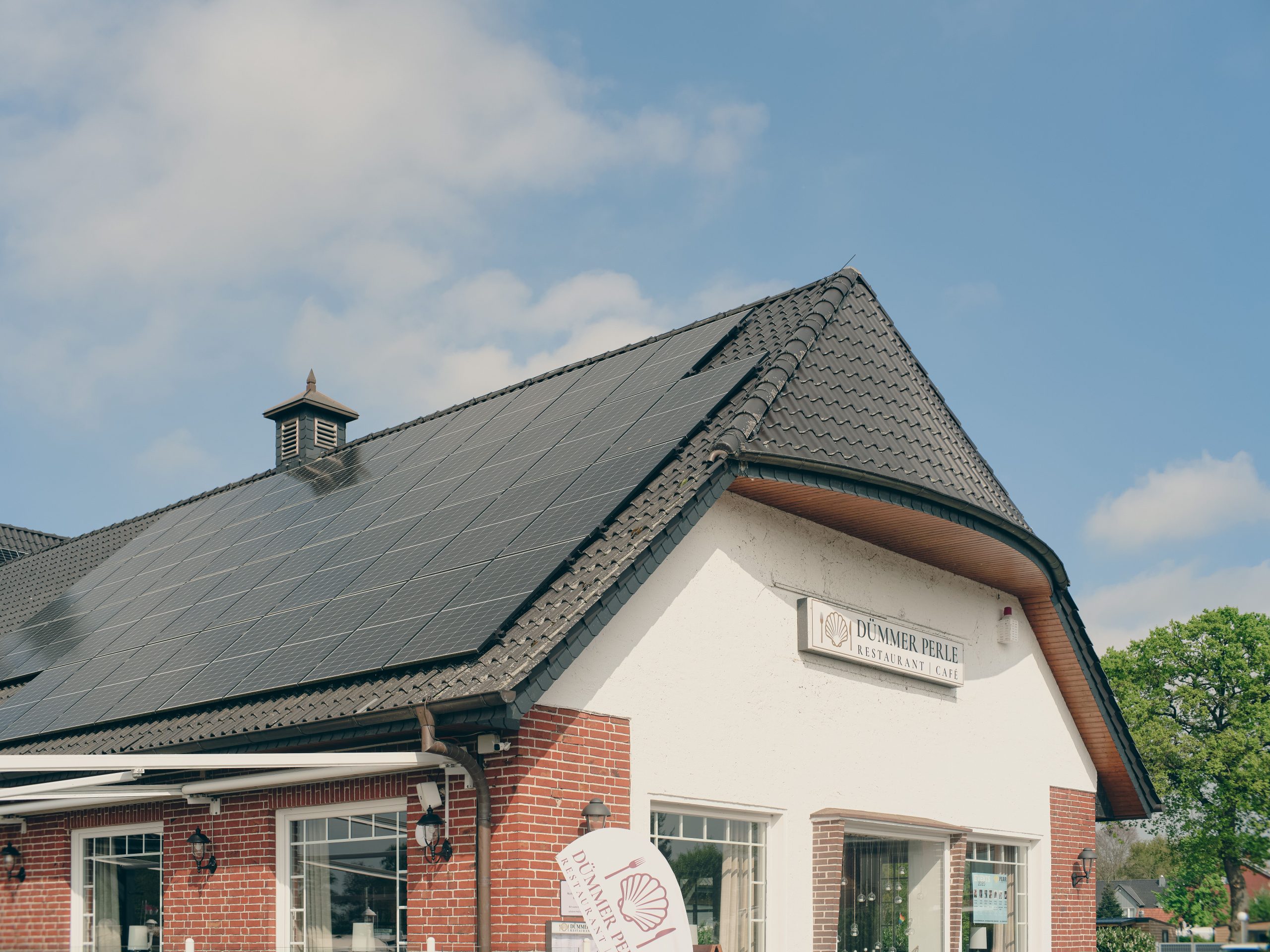
Solar panels used to be something a restaurant owner discussed with a contractor, a utility, and perhaps a landlord. Now they are becoming part of the guest experience. A rooftop array, a short note on the menu, or a live energy display can tell diners that the restaurant is thinking beyond the plate.
That visibility matters because restaurants are unusually energy-intensive businesses. The U.S. Environmental Protection Agency’s ENERGY STAR guidance says restaurants use roughly five to seven times more energy per square foot than many other commercial buildings, with quick-service locations potentially using even more. A solar commitment is therefore not just a decorative sustainability story. It is tied to the ovens, refrigeration, ventilation, lighting, and hot water that make service possible.

The best solar message is specific
“We are green” is easy to print and difficult to prove. “Our rooftop solar system generated 18,400 kilowatt-hours last month” is more useful, provided the figure is accurate and the restaurant can explain how it was measured.
The Federal Trade Commission’s guidance on environmental marketing claims warns against broad, unqualified claims such as “eco-friendly.” Its practical lesson for restaurants is simple: name the benefit and qualify it. Say whether the electricity comes from panels on the building, a community solar project, a utility program, or renewable energy certificates. Those are not interchangeable claims.
A strong guest-facing statement answers three questions:
- What is the source? For example, rooftop photovoltaic panels or a contracted renewable electricity product.
- What does it support? The dining room, kitchen, refrigeration, a percentage of annual electricity use, or a particular location.
- How is it tracked? Give a reporting period, production figure, percentage, or link to a project page.
This is not merely a compliance exercise. Specific language gives diners something they can understand and share. It also protects the restaurant from promising that solar powers every appliance at every hour when the grid remains part of the system.
Put the proof where diners already look
A solar commitment should not be hidden in a corporate responsibility report that most guests will never open. Restaurants have several natural communication surfaces, each with a different job.
On the menu
The menu is where a sustainability message meets the food itself. A small “Our energy” note can sit near the sourcing statement, beverage list, or footer. Keep it short: “Our rooftop solar array supplies part of this location’s annual electricity use. Learn how it works at [short URL].”
Restaurants that want a polished visual treatment can use a menu maker to create a consistent callout, then carry the same language onto table cards and takeaway materials. The design should support the claim, not overwhelm the menu with a sustainability badge.
At the entrance and host stand
A small sign can explain what guests are looking at when panels are visible from the car park or patio. A QR code can lead to the system size, installation date, annual production, and the restaurant’s approach to energy efficiency. The page should be maintained; a dead QR code quietly tells customers that the initiative was a campaign rather than an operating practice.
On the receipt and ordering screen
Digital receipts and kiosk screens are useful for a one-line reminder, especially in fast-casual restaurants where the guest may never sit near a printed table card. Avoid turning the checkout into a lecture. A concise sentence and an optional link are enough.
In the dining room
A small monitor showing current solar generation can make an invisible process visible. But live data is only valuable if it is labeled properly. Solar output at noon is not the same thing as total daily production, and a cloudy reading is not evidence that the system has failed. Explain the unit and time period alongside the number.
Solar is only one part of the kitchen story
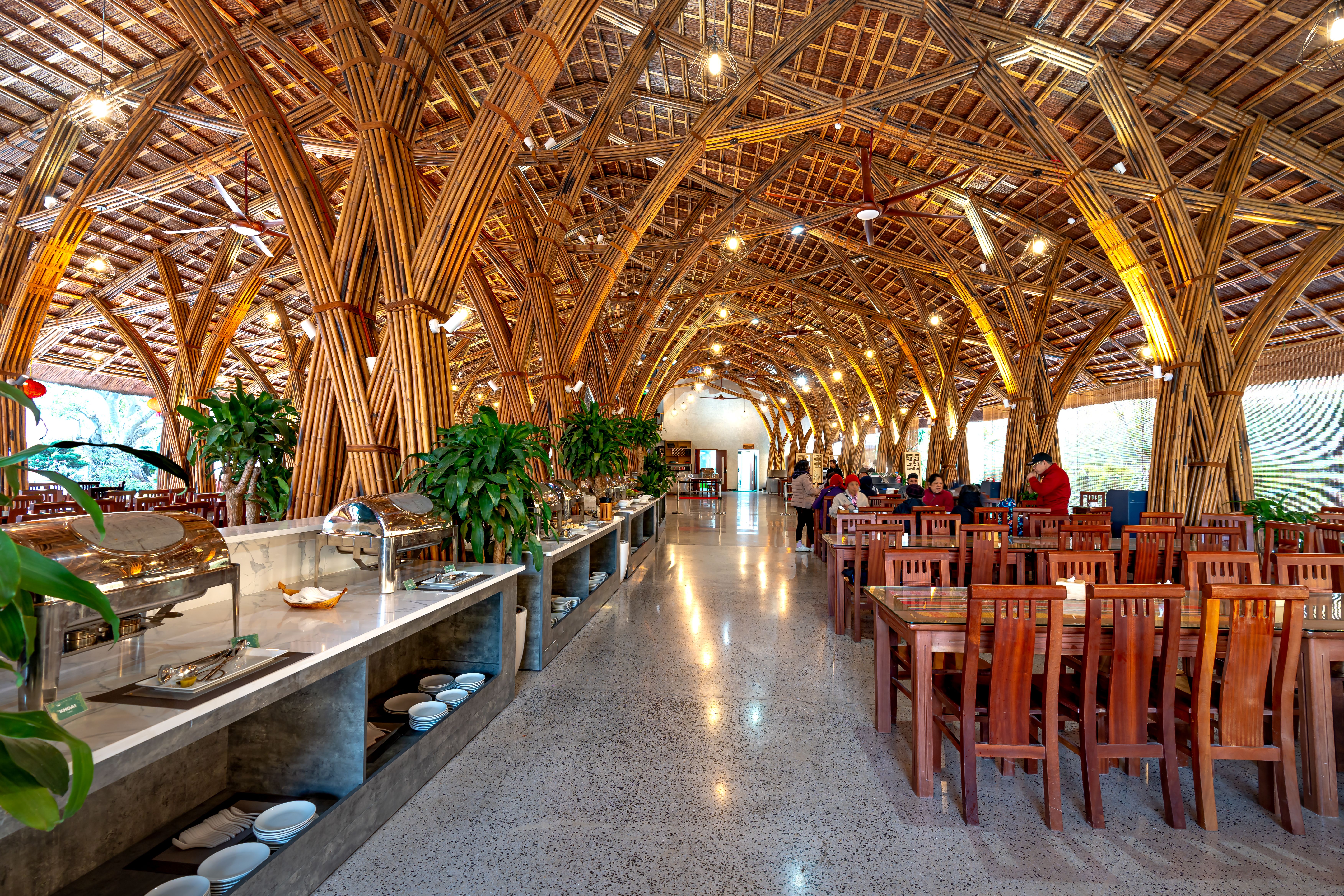
A restaurant can install solar and still waste energy through idle equipment, leaking refrigerator gaskets, poor ventilation controls, or lights left on after closing. That is why the strongest restaurant sustainability stories pair generation with reduction.
The current ENERGY STAR restaurant energy and water checklist recommends benchmarking utility use, creating start-up and shut-down schedules, maintaining refrigeration, and evaluating efficient commercial equipment. Its 2024 checklist gives median energy-use-intensity figures of 402.7 for quick-service restaurants and 325.6 for other restaurants and cafeterias, measured in energy per square foot. Those figures are benchmarks, not promises, but they help an operator see whether a solar project is being asked to cover an inefficient baseline.
For diners, the message can be as straightforward as: “We generate renewable electricity and work to use less energy in the kitchen.” That is more credible than implying panels erase every environmental impact associated with food, packaging, transport, and waste.

Leased locations need a different solar playbook
Not every restaurant controls its roof. A lease may restrict alterations, the building owner may be planning a roof replacement, or the restaurant may not want a power-purchase agreement that lasts longer than its tenancy.
The U.S. Department of Energy’s Better Buildings peer exchange on solar in hospitality, food service, grocery, and retail describes both on-site and off-site approaches. On-site solar can offer visible infrastructure and potential energy-cost benefits, while off-site arrangements can avoid construction disruption. The same discussion identifies landlord approval, roof condition, and coordination across locations as recurring challenges.
That leaves restaurants with several legitimate stories to tell:
- On-site generation: panels are installed at the restaurant or a building in the restaurant’s portfolio.
- Landlord-led solar: the property owner owns the array and sells or allocates the electricity to the tenant.
- Off-site procurement: the restaurant contracts for renewable electricity generated elsewhere.
- Efficiency-first progress: the restaurant reduces demand while it works toward a solar installation or a suitable renewable contract.
None of these is automatically the “real” option. The honest story is the one that says exactly which arrangement is in place.
A useful precedent: make the project operational
Whole Foods Market offers a documented example of how renewable energy can move from isolated experiments to a portfolio strategy. In a Better Buildings case study, the company’s early rooftop installations began with individual locations; by the end of 2015, it had completed almost 40 installations and announced plans involving roughly 100 facilities through third-party power-purchase agreements.
The lesson for an independent restaurant is not to imitate the scale. It is to treat solar as an operating project rather than a one-time branding event. Assign someone to review production, keep the public explanation current, coordinate maintenance, and connect energy decisions to equipment replacement and renovation schedules.
What diners should see on a credible solar page

A QR code or website page does not need to become a technical report. It does need enough detail to answer ordinary questions:
- Where is the system located?
- Who owns or operates it?
- Does it supply this restaurant, multiple locations, or a separate facility?
- What percentage of electricity use did it cover during the last reported period?
- Are the figures estimated, metered, or supplied by a utility or project owner?
- What is the restaurant doing beyond solar, such as efficient equipment, ventilation controls, or food-waste reduction?
It is also worth stating what the project does not claim. Solar does not make a restaurant carbon-free, and renewable electricity does not automatically address water use, food miles, disposable packaging, or waste. A limitation stated plainly can make the rest of the commitment more believable.
Five questions diners are likely to ask
Does solar power the restaurant at night?
Usually, the restaurant remains connected to the electric grid. Solar generation may reduce the amount of electricity purchased over a billing period, but panels do not normally supply the kitchen after sunset unless the site also has suitable energy storage.
Is rooftop solar better than buying renewable electricity?
Neither is universally better. Rooftop solar is visible and tied to a specific building, while off-site products may work for leased or shaded locations. The important distinction is to describe the arrangement accurately.
Can a restaurant claim it uses 100% solar power?
Only when the claim is supported by the restaurant’s actual generation and qualifying renewable electricity purchases, and when the wording makes clear what is being matched and for which period. A panel-covered roof alone does not prove that every hour of consumption came from solar energy.
What should a restaurant measure?
At minimum, track electricity consumption, solar generation, the share covered by the project, and the reporting period. Add efficiency measures such as equipment upgrades or reduced operating hours when those figures are available.
What if the restaurant cannot install panels?
Start with an energy baseline, efficiency improvements, and a transparent renewable procurement option. A restaurant that explains its constraints and reports progress is more trustworthy than one that uses a green label without evidence.
The menu should invite curiosity, not end the conversation
Restaurants have a rare advantage in sustainability communication: diners are already paying attention to what is on the table, where it came from, and how it was prepared. Solar can extend that conversation to the building itself, but only if the message is concrete.
My view is that the winning approach is modest and measurable. Show the panel system, explain the electricity relationship, publish a reporting period, and pair the claim with the less glamorous work of reducing kitchen demand. A small, accurate note will build more trust than a wall of green slogans.
How this article was put together
This article was researched for restaurant operators and marketers planning to communicate solar or renewable-energy work to diners. It draws on ENERGY STAR’s 2024 restaurant checklist and commercial-kitchen guidance, the U.S. Department of Energy’s Better Buildings material on solar in food service and retail, the Whole Foods Market case study, and the FTC’s environmental-marketing guidance, checked on October 8, 2026. Solar economics, utility rules, tax treatment, and claim requirements vary by location, so the figures and wording should be reviewed with the relevant utility, project owner, and legal adviser before publication.